Healthy Pantry Reset
Healthy Pantry Reset: How to Stock Your Shelves for Weight-Loss Success
If you’re starting a weight-loss journey, one of the most powerful (and overlooked!) places to begin is your pantry. A healthy pantry reset helps you remove hidden obstacles, upgrade your food environment, and set yourself up for long-term success. Think of it as giving your goals a fresh, organized, supportive home.
Whether you’re re-committing to healthier habits or starting from scratch, this step-by-step guide will help you transform your pantry into a space that makes healthy eating easier—not harder.
Why a Healthy Pantry Reset Matters for Weight Loss
When it comes to consistent results, the food you keep within arm’s reach can make all the difference. A well-organized, health-focused pantry:
Reduces impulsive snacking
Makes meal prep easier and faster
Helps you avoid ultra-processed foods
Supports mindful choices
Saves money by cutting down on food waste
In other words, your pantry can either support your weight-loss journey…or sabotage it. A pantry reset is one of the simplest ways to get the odds back in your favor.
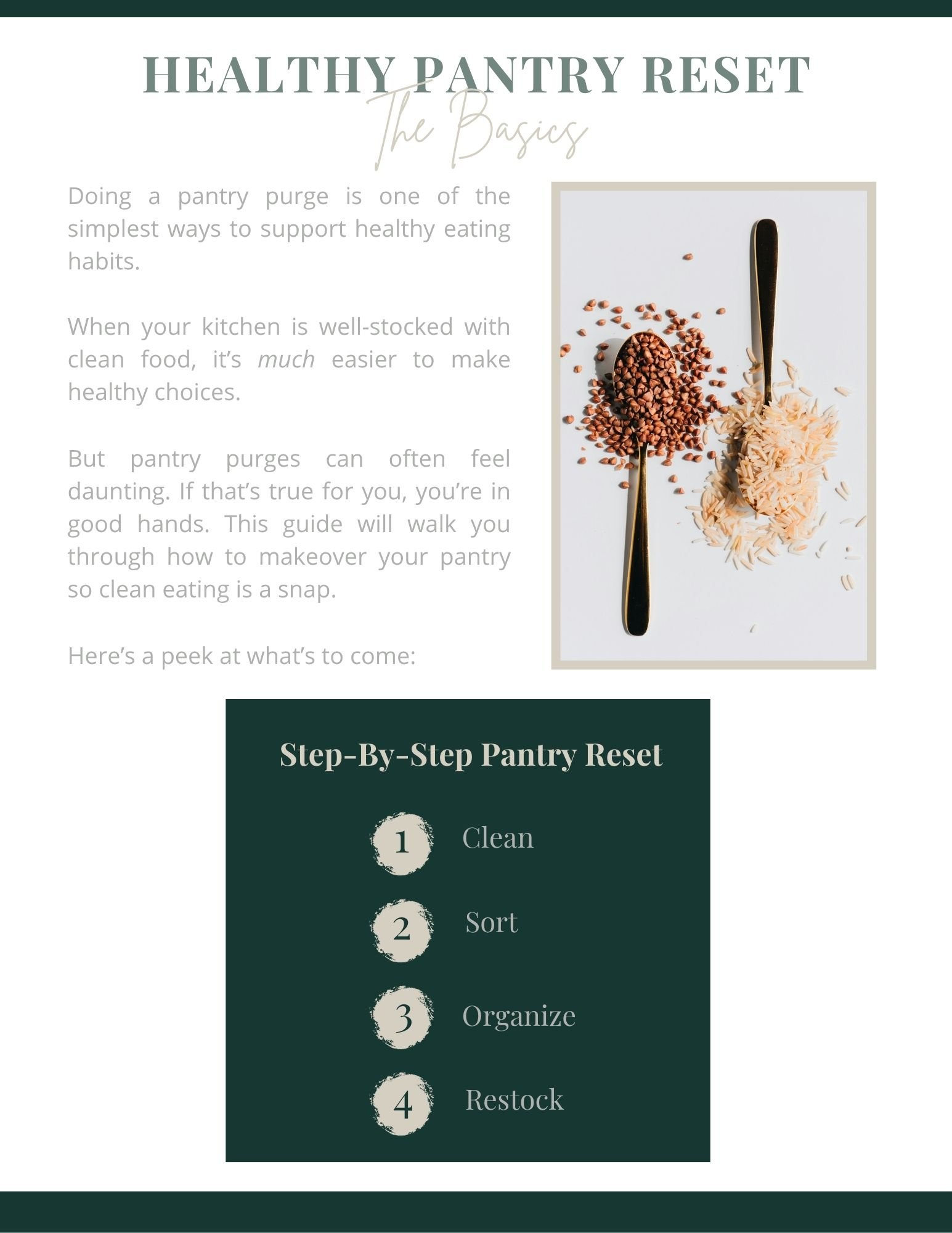
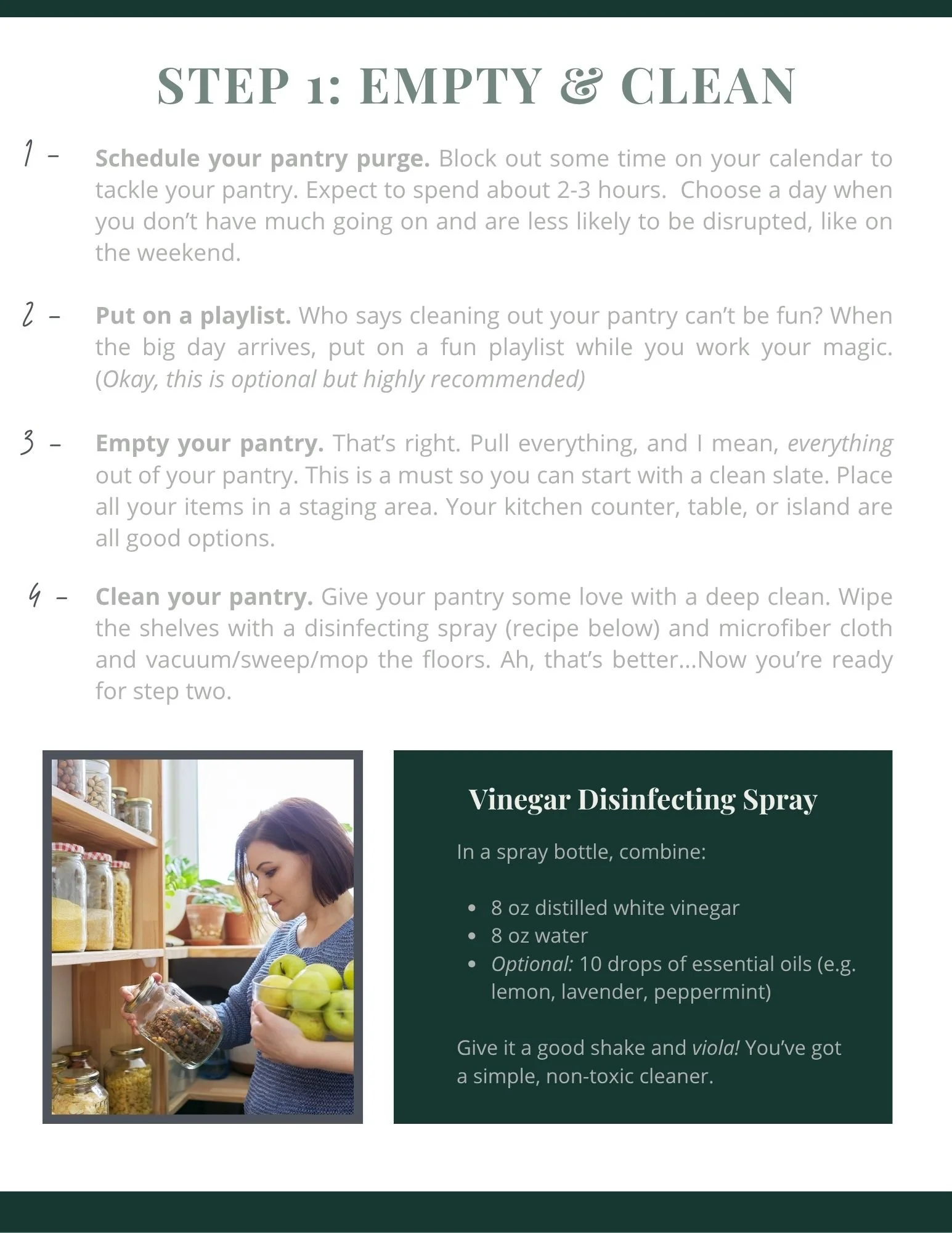
Step 1: Clear Out the Clutter
Start with a clean slate. Remove everything from your pantry and sort it into categories.
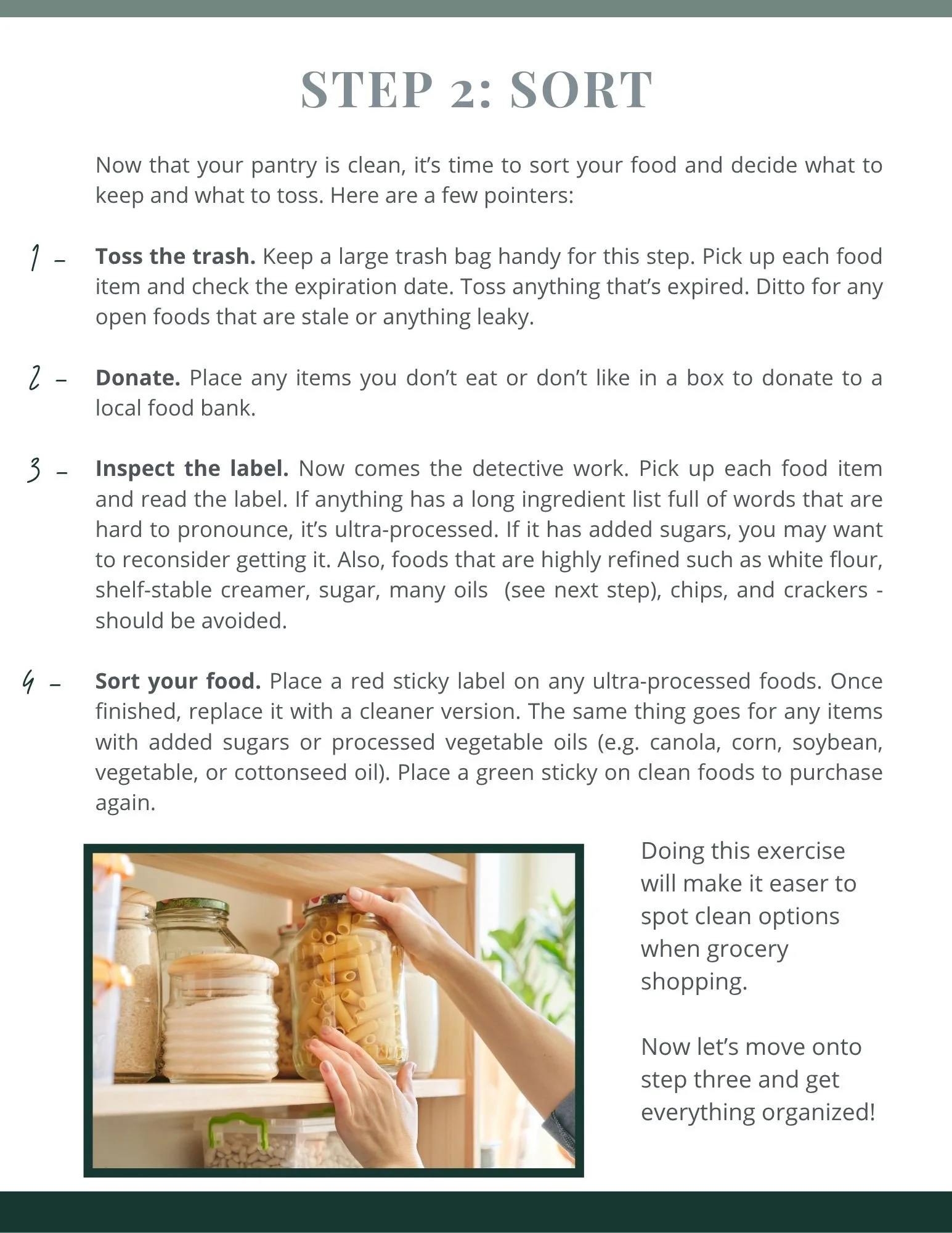
Foods to reconsider or remove
Ultra-processed snacks (chips, cookies, crackers)
Sugary cereals
High-calorie sauces
Sweetened drinks and drink mixes
Expired or stale items
“Trigger foods” you tend to overeat
Ask yourself: Does this support my goals? Does this make me feel energized or sluggish?
Step 2: Restock With Weight-Loss Friendly Pantry Staples
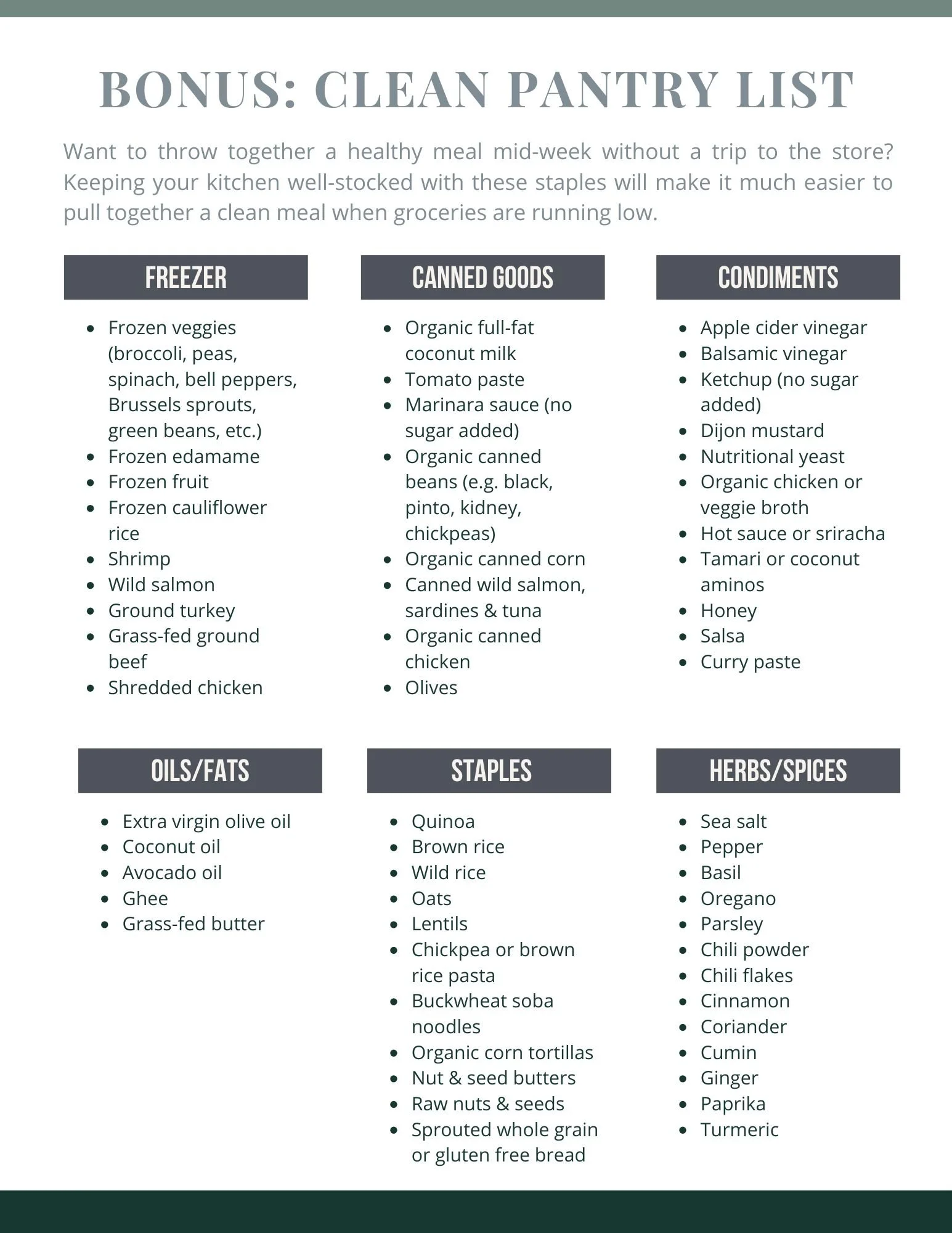
Once you’ve decluttered, it’s time to rebuild. Here are smart, nutrient-dense pantry staples that support weight loss:
High-Fiber Carbohydrates
These help you stay full and maintain stable energy:
Rolled oats
Quinoa
Brown rice
Farro
Whole-wheat pasta
Black beans, chickpeas, lentils
Lean Proteins
Pantry-friendly protein is key for appetite control:
Canned tuna or salmon
Canned chicken
Beans and lentils
Protein powder (whey or plant-based)
Healthy Fats
These keep meals satisfying without overeating:
Extra-virgin olive oil
Avocado oil
Raw nuts and seeds
Natural nut butters
Smart Snacks
Choose options that support your goals:
Air-popped popcorn
Rice cakes
Roasted chickpeas
Seaweed snacks
Flavor Boosters
Healthy food doesn’t have to be bland!
Herbs and spices
Low-sodium broths
Salsa
Vinegar (balsamic, apple cider, rice vinegar)
Tomato paste and canned tomatoes
Step 3: Organize for Success
A well-organized pantry makes healthy choices automatic.
Try these simple organization strategies:
Place healthy staples at eye level
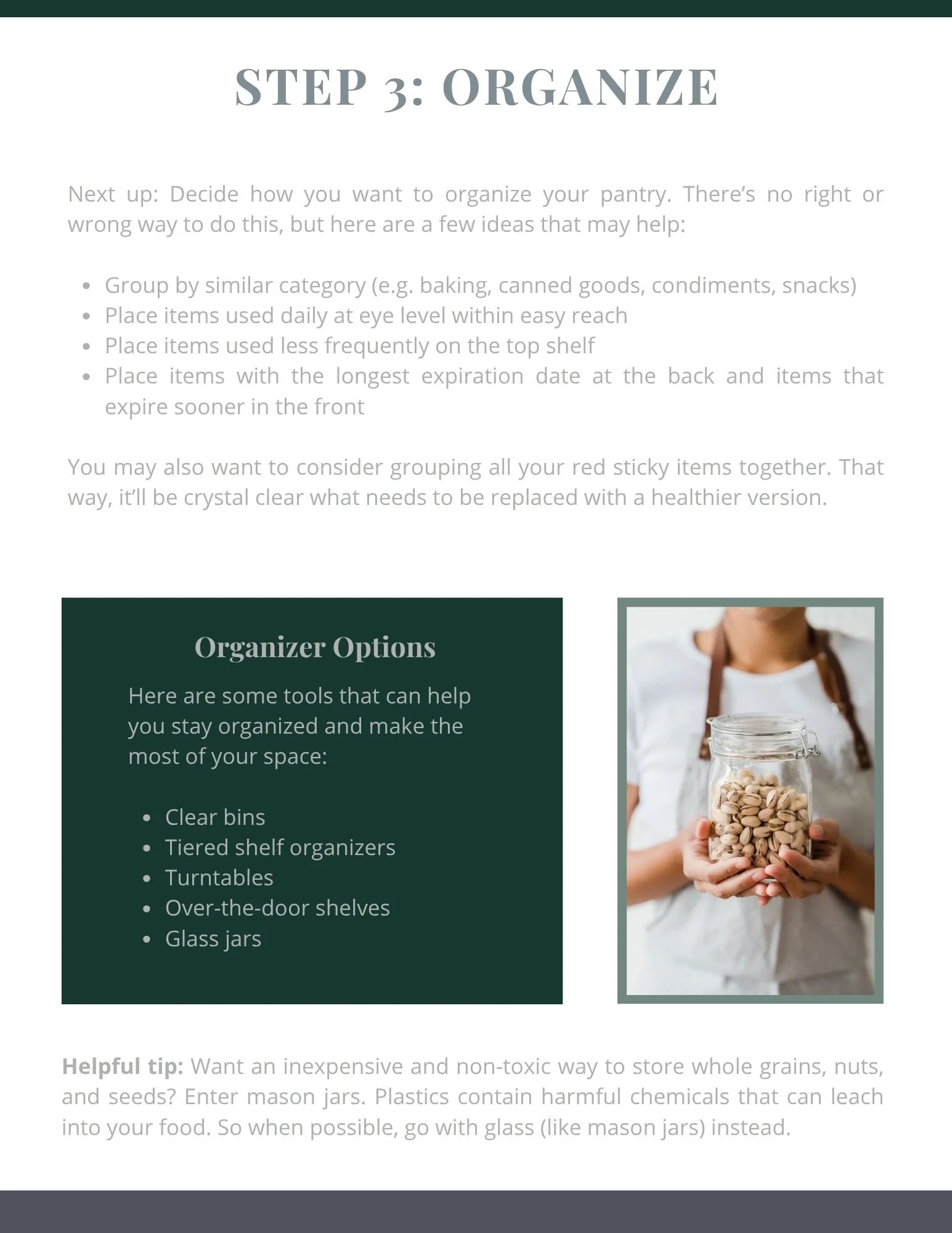
Use clear bins or jars for grains, nuts, and snacks
Create zones: “Breakfast,” “Snacks,” “Grains,” “Cans,” etc.
Keep “occasional foods” on higher shelves
Label everything to reduce decision fatigue
When your pantry looks clean, appealing, and simple, you’ll naturally gravitate toward better choices.
Step 4: Create a Go-To Meal and Snack List
To keep healthy eating easy, create a list of quick meals you can make with your new pantry staples.
Examples:
Oatmeal with peanut butter and fruit
Whole-grain pasta with canned tomatoes and herbs
Lentil soup using canned lentils and broth
Tuna salad with olive oil and spices
Chickpea bowls with rice and veggies
Having quick, satisfying meals ready to go reduces the temptation to reach for convenience foods or order takeout.
Step 5: Maintain Your Healthy Pantry
Consistency is key. Refresh your pantry regularly by:
Doing a 5-minute weekly check-in
Pre-planning shopping lists
Rotating older items to the front
Restocking healthy staples before they run out
Your pantry should evolve with your goals—and support them.
Final Thoughts: Your Pantry Is the Foundation of Your Weight-Loss Journey
A healthy pantry reset isn’t just about removing junk food—it’s about creating an environment where your healthiest choices are the easiest ones. By stocking your shelves with whole foods, organizing your space, and building a foundation of simple meals, you’ll feel more confident and more in control of your weight-loss journey.
Small steps matter—and this one can make a big difference.